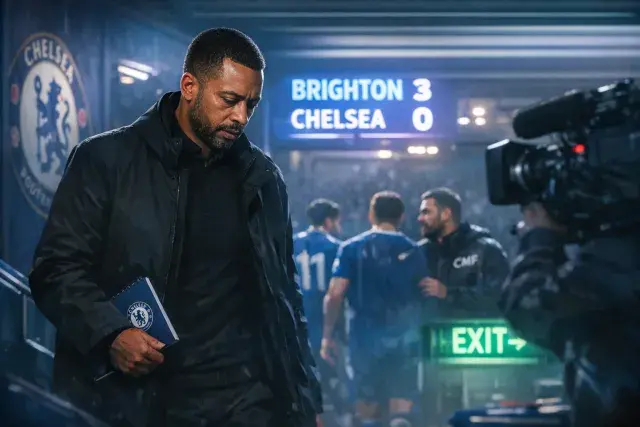

Chelsea Football Club has parted ways with head coach Liam Rosenior less than four months after his appointment, following a dismal run of results including five straight Premier League defeats without scoring. The 41-year-old Englishman oversaw the team's slide from contention to seventh place, seven points from Champions League qualification, capped by a 3-0 loss at Brighton on Tuesday. This decision underscores the intense pressure at a club pursuing European football, with interim coach Calum McFarlane stepping in ahead of Sunday's FA Cup semi-final against Leeds.
Historical Low Point Triggers Swift Action
Rosenior's tenure marked Chelsea's longest Premier League losing streak since November 1993, with no goals scored across five matches—the first such drought in 114 years. Their last victory and goals came on March 4 against Aston Villa, after which form collapsed, dropping them to 13th in the recent standings table. Appointed in January as Enzo Maresca's replacement midway through the season, the inexperienced coach faced scrutiny for a passive display at Brighton, which he publicly called "unacceptable" and "indefensible."
Club Statement Signals Push for Stability
In Wednesday's announcement, Chelsea praised Rosenior's integrity and professionalism but cited recent performances as falling below standards with much of the season remaining. The club emphasized the decision's weight, committing to self-reflection for a long-term head coach appointment to restore stability. First-team coach McFarlane, who previously served as interim after Maresca's exit, now takes charge until season's end, navigating immediate challenges like the looming cup tie.
Replacement Search Points to External Interest
French reports indicate Chelsea has contacted Andoni Iraola, set to depart Bournemouth at contract's end, as a potential successor. This move reflects broader patterns in elite football management, where poor results prompt rapid changes to salvage campaigns and secure continental spots. With European qualification at risk, the timing amplifies stakes, potentially reshaping squad dynamics and strategic direction through summer.